Tag: children

  • Surviving and enjoying lockdown with kids

    Surviving and enjoying lockdown with kids

    With schools closed in NSW and Victoria, and childcare restricted to authorised workers in Victoria, many children will be at home for the next few weeks. And with their usual creative and physical outlets – libraries, sport, playgroups, and other public places – now cut off, families want to be innovative in the ways they interact with kids in the home.

    Children have experienced trying to stay safe from the virus for 18 months now.

    Jony Doe

    Use Zoom, Facetime, or Skype to keep in touch with family and friends, both local and overseas to stay social, and maintain friendships and relationships when you can’t be together.

    How to keep kids engaged and parents sane

    Keep a routine. Giving children a structure to each day will help them feel more secure, and it gives parents and caregivers a routine to work around. Try to do the things you would normally do, including your showering/bathing routine, keeping consistent mealtimes, and restricting recreational access to screens, having at least some screen-free time each day, as you would at other times. 

    If possible, ensure that everyone in the family has time and space to retreat and have alone time. It is challenging to be in a confined area with the same people for extended periods of time. Maintaining your mental health is important at times like these.

    Find time for children to get fresh air and sunlight. This may be as simple as spending some time in the backyard or on the balcony. If you live in a place where you can’t get outside, open your curtains and windows if you can, and let the natural light in.

    Children thrive on parental attention

    For both parents and children, it’s important to remember, the lockdowns won’t last forever. This period of time may be difficult, but it will pass as Australia speeds up its vaccination rates, providing protection for those vaccinated against hospitalisation and death. With strong vaccination rates, we can be confident into 2022 that we can protect the most vulnerable members of society.

    In this time ask them if they just want to share, or if they want you to help them to find a solution. Children don’t always want advice, sometimes being heard is enough. If you or your children need further support, please reach out to a trained professional such as a psychologist, social worker or GP. 
  • Rohingya refugee children in Desh want to learn

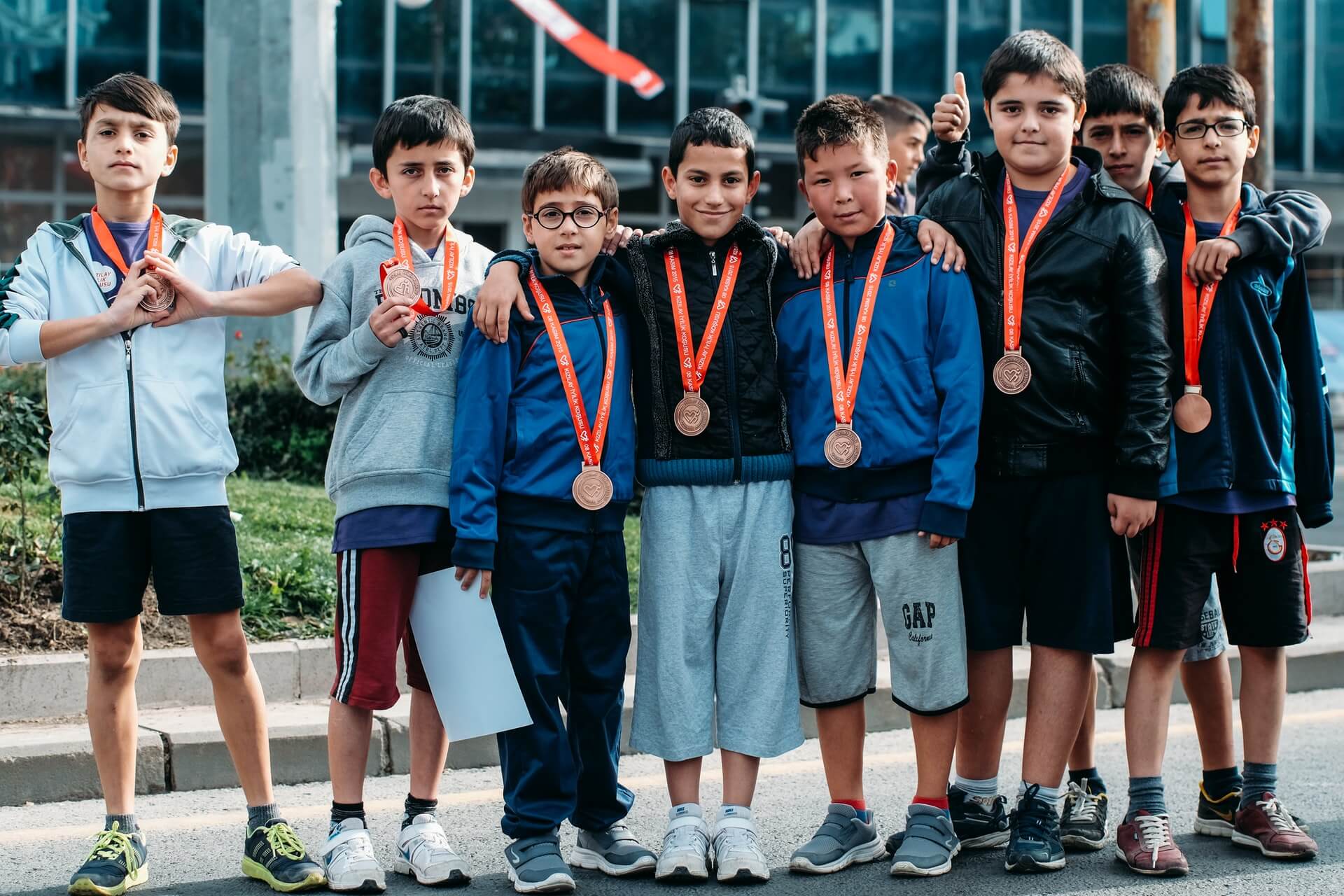
    Rohingya refugee children in Desh want to learn

    New infrastructure and efforts aimed at providing the basics of health care, nutrition, and water, sanitation and hygiene have improved conditions for the children and families who fled persecution and violence in Myanmar.

    (more…)
  • The impacts of climate change put child at risk

    The impacts of climate change put child at risk

    In many parts of the world, people are facing multiple climate-related impacts such as severe drought and flooding, air pollution and water scarcity, leaving their children vulnerable to malnutrition and disease. Almost every child on earth is exposed to at least one of these climate and environmental hazards.

    Approximately 1 billion children are at an ‘extremely high risk’ of the impacts of the climate crisis.

    Jony Doe

    These children experience multiple climate shocks combined with poor essential services such as water, sanitation and healthcare. As climate change disrupts the environment, children are being forced to grow up in an increasingly dangerous world. This is a crisis that threatens their health, nutrition, education, development, survival and future.

    Risk of pollution

    • Find a location and work with the town to organize event details.
    • File for a permit to block off the roads
    • Obtain city and police approval for the event
    • Include registration forms and waivers on your event page

    On a heavily polluted morning, a mother walks with her daughter across a snow-covered area of Kabul, Afghanistan.

    Children in Kabul are at increased risk of respiratory infections including pneumonia, from the burning of fossil fuels and other environmental contaminants. Child deaths from pneumonia, the biggest single killer of children, are concentrated in the world’s poorest countries.

    Time to listen and to act

    UNICEF is teaming up with young climate activists to raise awareness about climate change and the need to act. We brought together 300 “child parliamentarians” from all over Bangladesh to debate climate issues, policies and actions with their elected representatives. 

    UNICEF supported the Government’s Floods Response Plan and helped more than 250,000 people in the most affected areas with water, sanitation and hygiene supplies, first aid kits and textbooks for primary and secondary schools.

  • Supporting your child’s mental health during COVID-19

    Supporting your child’s mental health during COVID-19

    The COVID-19 pandemic has caused major disruptions to daily life and children are feeling these changes deeply. While a return to school will be welcomed by many students, others will be feeling anxious or frightened. Here are tips to help your children navigate some of the complicated emotions they may be facing with going back to school.

    How parents can help their children navigate their feelings during school reopenings.

    Jeremy Lin

    My child is scared to go back to school. How can I help him feel at ease? 

    Starting school or starting a new school year can be stressful at the best of times, let alone during a global pandemic. You can make him feel at ease by having an open conversation about what it is that’s worrying him and letting him know that it’s natural to feel anxious.

    • Be on guard for a surge of solicitations related to any highly publicized crisis.
    • Do not respond to, or click on any attachments, links or pictures.
    • Beware of individuals or others claiming to be third-party intermediaries for charities or those in need.
    • Avoid name confusion by independently verifying that the charity is legitimate before you donate. 

    How can I encourage my child to follow precautions (such as frequent handwashing,  etc.) at school without alarming her?

    Children may feel nervous or reluctant to return to school, especially if they have been learning at home for months. Be honest – for example, you could go through some of the changes they may expect at school, such as needing to wear forms of protective clothing like masks.

    Children may also find it difficult being physically distanced from friends and teachers while at school – you could encourage them to think about other ways to bond and stay connected.

  • Delivering for Afghanistan’s children

    Delivering for Afghanistan’s children

    Increased conflict and insecurity in Afghanistan have left children paying a heavy price. Afghanistan was already one of the most dangerous places in the world to be a child. Now, with a security crisis, skyrocketing food prices, a severe drought, the spread of COVID-19, and another harsh winter just around the corner, children are at greater risk than ever.

    Children should not pay for conflict with their childhoods. Afghanistan’s children need peace.

    Jony Doe

    UNICEF has been on the ground in Afghanistan for 65 years with offices nationwide and a range of partners that support us in delivering life-saving assistance to the most vulnerable, especially children.

    What’s happening in Afghanistan? 

    • Think about data in everything you do
    • Network with other data “non-geeks”
    • Get comfortable with a new way of working

    UNICEF is supporting mobile health and nutrition teams in camps for internally displaced persons, setting up nutrition hubs and vaccination sites, pre-positioning additional life-saving supplies, and supporting students in community-based education classes.

    Against a backdrop of conflict and insecurity, children are living in communities that are running out of water because of drought. They’re missing out on life-saving vaccines. Many are so malnourished they lie in hospital beds, too weak to grasp an outstretched finger.

    How is UNICEF responding?

    UNICEF is continuing to work with partners to support children and their families across the country.

    UNICEF

    UNICEF is committed to continuing its work for children and families across Afghanistan. To reach the hardest-to-reach children, UNICEF is advocating with all parties to ensure safe and unhindered humanitarian access, in line with the Core Commitments for Children in Humanitarian Action.

    UNICEF is supporting emergency water, hygiene and sanitation (WASH) services, including the provision of safe water through water trucking, construction and repair of handpumps, along with the provision of supplies and hygiene promotion.

  • How to get started with data in fundraising

    How to get started with data in fundraising

    It’s time to rethink our approach to data in fundraising so everyone feels like a pro, even if Excel makes you break out in a worried sweat. When we use data we’re more equipped to make better decisions for our strategy, supporters and team; important in a year of more uncertainty!

    Children have experienced trying to stay safe from the virus for 18 months now.

    Jony Doe

    Use Zoom, Facetime, or Skype to keep in touch with family and friends, both local and overseas to stay social, and maintain friendships and relationships when you can’t be together.

    Invest in a good CRM – and use it!

    • Think about data in everything you do
    • Network with other data “non-geeks”
    • Get comfortable with a new way of working

    If you’re a fundraiser that’s daunted by data you may be surprised how much you’re already using it. Every time you segment your database, draft your budget forecast or analyze a campaign to see if it can be saved with a tweak (or it’s time to let go), you’re using data. Data in fundraising is using the statistics and insights available to you, not intuition or feeling, to make decisions.

    Find time for children to get fresh air and sunlight. This may be as simple as spending some time in the backyard or on the balcony. If you live in a place where you can’t get outside, open your curtains and windows if you can, and let the natural light in.

    Be aware of data pitfalls

    It’s time to rethink our approach to data in fundraising so everyone feels like a pro.

    Nikki Bell

    If we have a good idea that we’re passionate about, it’s very easy to analyse data in a way that will prove that we’re right. This is called ‘confirmation bias’ and is something you need to be mindful of from day one to keep yourself and your team in check. Without this awareness, we lack the opportunity for innovation and growth – a key focus for charities in 2021!

    In this time ask them if they just want to share, or if they want you to help them to find a solution. Children don’t always want advice, sometimes being heard is enough. If you or your children need further support, please reach out to a trained professional such as a psychologist, social worker or GP. 
  • Hurricane Ida Relief

    Hurricane Ida Relief

    Hurricane Ida, which made landfall in Louisiana on August 29, 2021 as a powerful Category 4 storm, was the fifth-largest hurricane to hit the U.S. Ida’s maximum sustained winds topped 150 mph, and along with its storm surge and torrential rainfall, Ida has left a trail of devastating flooding and structural damage as it continues to move northeast.

    Do not donate to unknown individuals purporting to need aid that post on Facebook, GoFundMe, etc.

    Jeremy Lin

    DONORS BEWARE

    As with any charitable contribution, Americans wanting to help with disaster relief efforts should only give to legitimate charities with an established track record of helping people in need.

    • Be on guard for a surge of solicitations related to any highly publicized crisis.
    • Do not respond to, or click on any attachments, links or pictures.
    • Beware of individuals or others claiming to be third-party intermediaries for charities or those in need.
    • Avoid name confusion by independently verifying that the charity is legitimate before you donate. 

    SEND A CHECK, NOT GOODS

    The best way to help is by sending a check or donating securely by credit card. Such cash donations enable charities to buy the most needed types of food, medicine, clothing, shelter materials, and other supplies. By buying relief products locally or regionally, charities can reduce shipping costs and more rapidly deliver assistance.

    For many charities, having enough funds to meet the increased demand for their services has been a real obstacle to address. Grants in particular remain and will always be an important source of funding. Locating such sources is only part of the challenge, the other is presenting an application that resonates with the provider and illustrates the charity in its best light.

  • What’s the future for Afghanistan’s children?

    What’s the future for Afghanistan’s children?

    Chris Nyamandi, Country Director of Save the Children Afghanistan is an eyewitness to the escalating chaos enveloping the country. Here he makes an impassioned plea to support the ordinary Afghan people who did not create this crisis.

    As harrowing footage emerges of children being passed over airport walls by parents in a desperate attempt to flee, many are asking me the same question: What does the future look like for the children who remain in Afghanistan?

    Let this be a loud cry for Afghan children and their families who need support, wherever they are.

    Jony Doe

    We have no intention of abandoning the staff, children and communities we have worked with for over four decades. So, our message to the UN, governments and other humanitarian agencies is clear: now is not the time to shirk your obligations to the Afghan people. 

    give Afghan children the future they deserve

    Since the end of May alone, the number of people internally displaced by conflict and in need of aid has more than doubled, more than half a million Afghans have been displaced within Afghanistan – over 330,000 of them are children. These families are living outside in the open under tarpaulins, with no access to food or medical care. While many desperately try and get to the airport, shots can be heard overhead.

    Safe passage to deliver lifesaving services in Afghanistan must be ensured for our brave female and male front line workers who, even amidst the chaos, tell us they want to go back to serving their communities, as doctors, nurses and teachers, among many other vital roles. 

    Save the Children

    Even before the recent escalation, almost half of the population – including nearly 10 million children – were in need of humanitarian assistance. Our staff has witnessed children succumbing to malnutrition, seen the devastation wreaked on communities by the drought, the impact on young girls when they have been subject to early marriage and then violation of children’s rights, when they are forced into work.